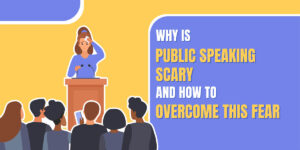
Why Do We Fear Pubic Speaking?

Why Do We Fear Public Speaking?
If you’ve ever felt your heart race, your palms sweat, your mouth go dry, or your mind suddenly go blank before speaking in front of a group, you’re not alone. Public speaking is one of the most common fears people experience. It doesn’t matter whether you’re speaking to five people at a committee meeting or fifty people in a crowded room. For many of us, the thought of standing up and having all eyes focused on us can be intimidating.
What makes public speaking particularly frustrating is that most of us do it every day. We talk with friends, family members, coworkers, and neighbors without giving it a second thought. Yet place those same people in front of a room and ask them to speak for five minutes, and suddenly everything changes.
But why?
The fear of public speaking often comes down to one simple thing: we don’t want to make a mistake in front of other people. Most of us worry about forgetting what we planned to say, losing our train of thought, mispronouncing a word, or looking foolish. We imagine everyone in the audience noticing every mistake.
The reality is that audiences are usually far more forgiving than we think. Most people are not sitting in their chairs waiting for us to fail. In fact, they are often hoping we succeed because an uncomfortable speaker makes for an uncomfortable audience.
Still, our minds can play tricks on us. Before a presentation, we may imagine every possible thing that could go wrong. Our bodies respond as if those fears are actually happening. Suddenly, your mouth feels dry. Your voice shakes. Your heart pounds. You forget the very thing you planned to say five minutes earlier.
What makes public speaking particularly challenging is that it feels different from everyday conversation. It feels like a performance. But in reality, public speaking is simply a conversation that has grown larger. Whether you’re speaking to five people or fifty, the goal remains the same: to share information, tell a story, or connect with others.
The good news is that public speaking is not a talent reserved for a lucky few. It is a skill, and skills can be learned.
One of the biggest misconceptions about public speakers is that they are fearless. Most are not. Even experienced speakers often feel nervous before stepping in front of an audience. The difference is that they have learned how to manage those feelings instead of letting those feelings manage them.Preparation is one of the best confidence builders.
The more familiar you are with your material, the less likely you are to panic. Think about how easily you can talk about your family, a favorite hobby, your work, or even your pet. You speak comfortably because you know the subject. The same principle applies to public speaking. Know your material and confidence follows.
Practice matters too. Few people become comfortable speaking in public by avoiding it. The best way to improve is to do it. Volunteer to give a report at a community meeting. Offer a toast at a family gathering. Speak up at work. Every opportunity helps build confidence.
Another helpful technique is to stop striving for perfection. Audiences are not expecting perfection. They are expecting authenticity. Most people would rather listen to a genuine speaker who occasionally stumbles over a word than someone who sounds robotic and overly rehearsed.
I’ve often told my communication students that audiences rarely remember the small mistakes speakers obsess over. What they do remember is whether the speaker was interesting, sincere, and prepared. The occasional stumble is usually forgotten within minutes.
It is also important to remember that public speaking isn’t limited to politicians, television personalities, or TED Talk presenters. At some point, most of us will be asked to speak in front of others. It may be a presentation to your company’s board of directors, a report to a volunteer organization, a speech at your child’s graduation party, a wedding toast, or, unfortunately, a eulogy for someone you love.
Those are not situations where you want your first public speaking experience.
The best time to develop speaking skills is before you need them. Like any skill, confidence grows through use. Start small. Practice often. Accept that nervousness is normal. Most importantly, don’t wait until you’re standing at a podium wishing you had prepared years earlier.
You may never speak to hundreds of people. You may never stand on a large stage. But learning to communicate confidently in front of others is one of the most valuable skills you can develop. The next time an opportunity presents itself, consider saying yes. You may discover that public speaking is not nearly as frightening as you once believed.